
Dog smell is one of the most common concerns for homeowners and buyers moving into a house that previously had pets.
In climates like Georgia’s, odors tend to linger longer because the warm, humid climate helps smells settle into carpets, subfloors, and air ducts.
Whether the odor is from your own dog or from a previous owner’s, you can get rid of it quickly with the right steps.
This guide explains how to remove dog smell fast, how to treat deeper odor sources, and how to spot when the smell may point to moisture or ventilation issues.
Why Dog Smell Lingers in Homes
Dog smell will stick to fabrics, carpets, HVAC systems, and soft materials in the house.
Atlanta’s average humidity often rises above 70%, which makes odors cling to surfaces far more than in dry climates.
The Carpet and Rug Institute notes that high moisture increases odor absorption, allowing smells to settle deeper and last longer.
Smells usually worsen:
• After furniture is removed
• After the home sits empty for several days
• When air conditioning has been off
• In homes with older carpet
• In crawl space homes with moisture issues
For buyers, this is why a house that seemed fine during a showing may smell during move in.
Here’s what you should do to get rid of it for good.
1. Start With a Full Surface Clean
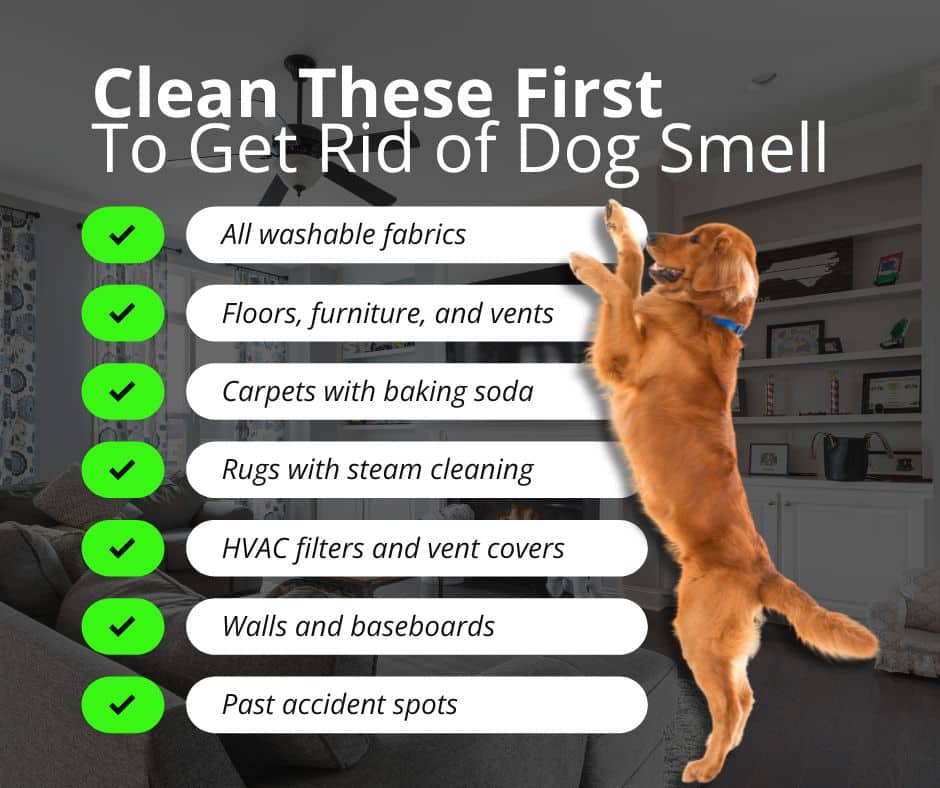
Wash anything washable. These materials absorb the most odor.
Washable items include:
• Blankets
• Curtains
• Couch covers
• Small rugs
• Pillow covers
Using hot water when possible helps break down oils and dander. You can add vinegar to the rinse cycle to help neutralize odors.
For hard surfaces:
• Wipe down furniture
• Clean baseboards
• Wash interior doors
• Clean window sills
• Wipe down cabinets in rooms where dogs spent time
If you just purchased the home, assume these surfaces collected pet oils over time.
2. Air Out the House the Right Way
Opening windows on opposite sides of the home helps odors move out faster. Cross ventilation is especially helpful if the home sat closed before your move in.
Avoid airing out the home during high humidity periods. The National Weather Service notes that Atlanta often experiences long stretches of humid afternoons, which can make odors stronger instead of weaker.
Use indoor fans to help move air through rooms. Turn on bathroom exhaust fans to help pull humid air out.
3. Vacuum More Than Just the Floors
Dander and hair settle everywhere. Vacuuming removes particles that cause long term odor.
Vacuum:
• Carpets
• Sofas
• Stairs
• Curtains
• Closets
• HVAC intake grilles
• Under furniture
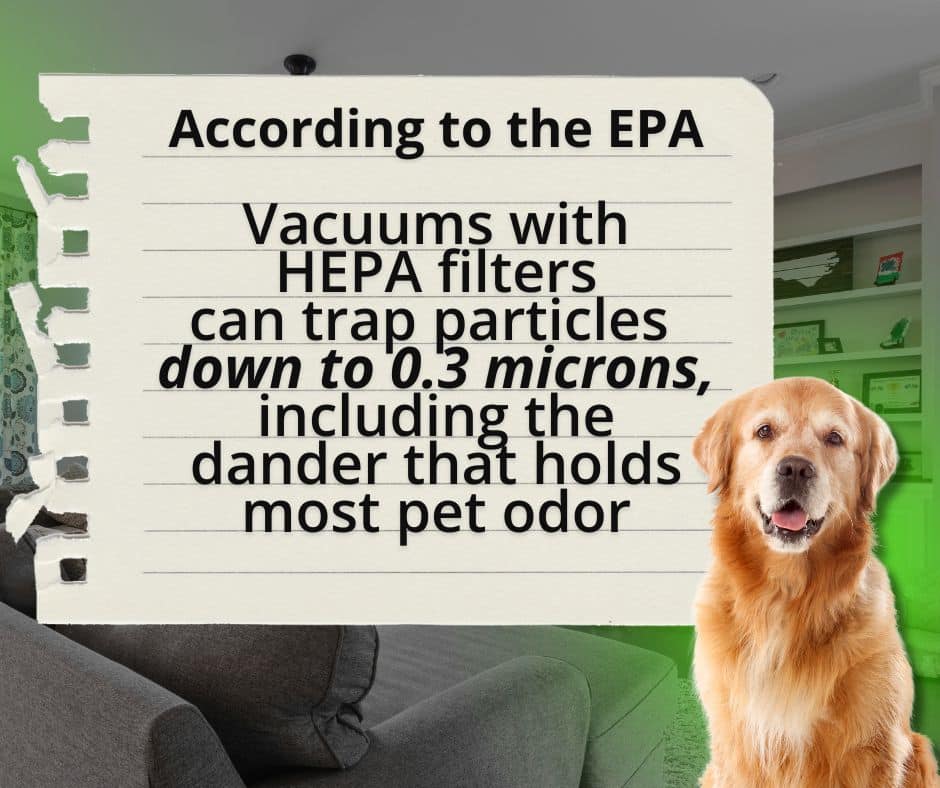
A vacuum with a HEPA filter can trap particles down to 0.3 microns, which includes the tiny dander that holds most pet odor.
This is especially important if you are a buyer moving into a home where pets lived for years.
4. Use Baking Soda to Absorb Smell
Baking soda is effective on soft surfaces and carpet. Sprinkle it, let it sit several hours or overnight, and vacuum it up. It pulls odor from both the surface and the padding underneath.
Try this before scheduling a professional carpet cleaning to see how much improvement you get.
5. Steam Clean Carpets and Rugs
Steam cleaning penetrates deeper than vacuuming. The EPA notes that carpet can trap pollutants, allergens, and organic debris over time.
High heat cleaning helps break these materials apart so they can be removed.
If the previous owner had multiple pets or the carpet is older, professional steam cleaning is usually necessary.
Homes with crawl spaces often struggle more because moisture rises from below and traps odor inside carpet padding.
6. Replace HVAC Filters and Clean Vents
Your HVAC system can carry dog smell through every room in the house.
Replace:
• HVAC filters
• Return vent filters
• Portable purifier filters
Atlanta homes rely heavily on cooling for much of the year, which means dander circulates constantly.
The American Lung Association notes that indoor air passes through HVAC systems five to seven times per hour. Even a small amount of trapped dander can spread noticeable odor.
If odor comes directly from vents, consider professional duct cleaning.
7. Clean Walls, Trim, and Baseboards
Pet oils stick to walls more than most people realize. Wipe low walls and baseboards in rooms where dogs slept or spent the most time.
Use:
• Warm water and mild soap
• Vinegar and water
• A gentle microfiber cloth
This works especially well for new homeowners because these areas often go unnoticed during regular cleaning.
8. Look for Moisture That Makes Odor Worse
Moisture holds onto smells. Atlanta homes, especially those with crawl spaces, are more prone to moisture problems that amplify pet odor.
Common signs:
• Musty smell
• Damp carpet edges
• Soft or warped baseboards
• Condensation on HVAC ducts
• Humid, cool floors
• Smell concentrated near exterior walls or low areas
Nearly half of Georgia homes have crawl spaces, and many do not have a full vapor barrier.
Moisture rising into flooring can trap dog smell and make it harder to remove.
When cleaning only helps for a short time, moisture is often the real cause.
9. Deal With Old Pet Accidents
If dog urine soaked into floors or carpet padding, enzymes work better than regular cleaners. They break down proteins that hold odor.
Steps:
- Blot the spot
- Apply enzyme cleaner
- Let it sit
- Blot again
- Repeat
For hardwood, long term odor may require sanding and resealing. In older homes, subfloors sometimes need treatment or replacement.
10. If the Dog Still Lives in the Home
Whether you already own dogs or just moved into the home to find the dog smell, maintaining cleanliness at the source helps the entire home smell better.
Clean Dog Supplies Regularly:
• Wash beds and blankets
• Clean collars and harnesses
• Wash towels and grooming supplies
• Sanitize toys that hold moisture
Old dog beds are a major odor source. Many new homeowners find that simply washing or replacing old bedding reduces odor dramatically.
Groom More Often:
Regular brushing reduces loose hair and oils. The ASPCA recommends bathing most dogs every one to two months depending on coat type.
Dogs that spend a lot of time outdoors may need more frequent cleaning.
Clean Crates and Resting Spots:
Wash crate pads, wipe crate walls, and vacuum the areas around where your dog sleeps. These spots collect the most dander and oils.
Keeping these areas fresh helps prevent odor from returning even after deep cleaning the rest of the home.
When Odor Suggests a Bigger Issue
Dog smell sometimes points to a deeper problem in the house, unrelated to pets. Odors become stronger when:
• Moisture rises from the crawl space
• The home has poor ventilation
• Carpet padding is old
• There is hidden water damage
• HVAC ducts are dirty
• Insulation is damp
• Flooring is past its lifespan
During inspections, we often find that heavier pet odor is a symptom of moisture or ventilation issues that were never addressed.
Odor Type and What It Usually Means
| Odor Type | Likely Source |
| Wet dog smell | Humidity, damp carpet, HVAC moisture |
| Musty dog odor | Crawl space moisture, wet insulation |
| Strong smell at vents | Duct dust, dander buildup |
| One room smells worse | Past accidents or local moisture |
| Odor near exterior walls | Siding leaks or foundation moisture |
| Sharp ammonia smell | Old urine in carpet pad or subfloor |
Visual Idea: Odor chart graphic with five squares showing odor type and common source.
Other Helpful Questions
What if the odor is coming from the crawl space instead of the living area?
Crawl space humidity and poor ventilation can affect indoor air and flooring. This is a common inspection finding in many Georgia homes.
Can flooring or subfloor issues cause strange odors in a home?
Yes. Older padding, damp subfloors, dirty grout, or aging wood can hold moisture and create lingering smells. Inspectors often check these areas when a room has a persistent odor.
How does crawl space moisture affect indoor air quality?
Moisture rising from below the home can carry musty air into living spaces. Homes with partial vapor barriers or poor ventilation experience this more often.
Is it normal for a home to smell different once furniture is removed?
Yes. Furniture often blocks sections of carpet and walls where dust or moisture settles. Once removed, these areas are exposed and odors become more noticeable.
Can moisture issues inside walls or insulation lead to recurring odors?
They can. Wet insulation, minor leaks, or past water damage can hold odor long after the original source dries. These conditions usually require a closer inspection.
When to Call a Professional
Reach out if you notice:
• Odor coming back after cleaning
• A mix of musty and pet odors
• Strong smells near vents or baseboards
• Suspected moisture or crawl space problems
• Odor that worsens after rain
• Signs of water staining or soft flooring
• Odors in only one or two rooms
A professional inspection can determine if the odor is only surface level or related to deeper issues inside flooring, insulation, or ventilation.
Conclusion
Dog smell can make a house feel less comfortable, but it does not have to last. With the right cleaning steps, ventilation, and odor removal methods, you can freshen the home quickly.
If odors return or seem tied to moisture, flooring, or HVAC concerns, a professional inspection with Avalon can help you understand the underlying cause.
Whether you are settling into a new home or maintaining the one you live in, removing dog smell is very doable with the right approach.