
A radon test measures how much radon gas has built up inside your home. The monitor goes in the lowest livable level, usually a basement, crawl space, or ground-floor slab, for anywhere from 2 to 90 days. Radon is invisible and odorless. Testing is the only way to know your level. If your result comes back at 4.0 pCi/L or higher, the EPA recommends mitigation.
The experts at Avalon Home Inspections are here to make sure you understand what happens during a test, why it’s often paired with a home inspection, and what your results mean for a Georgia home.
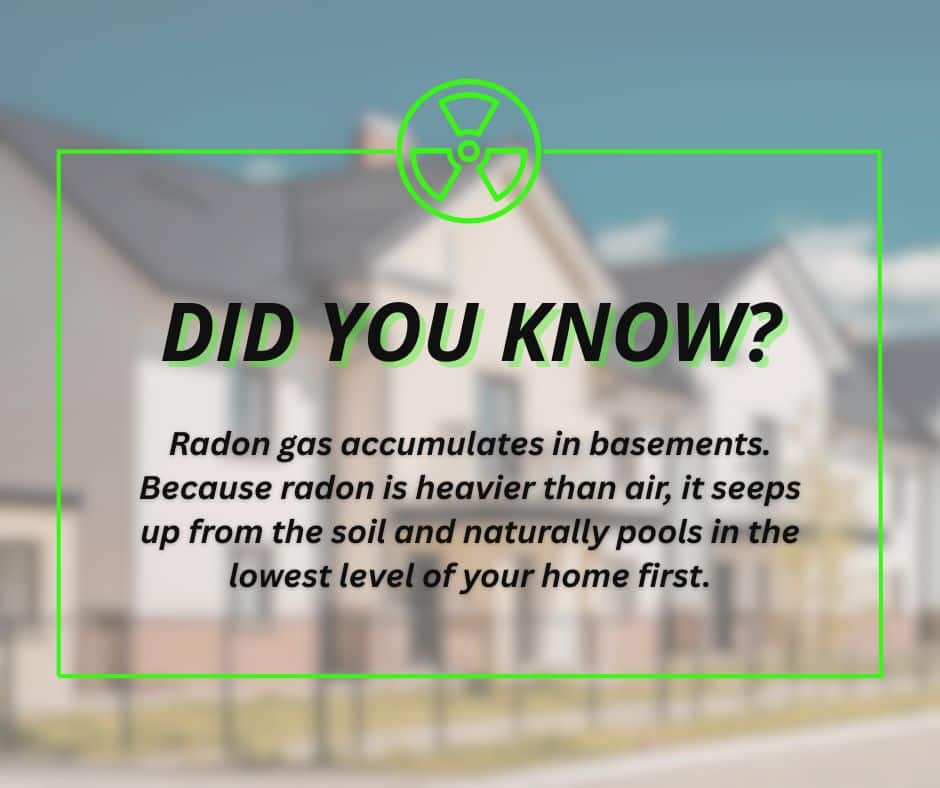
Why Radon Collects in Basements
Radon comes from the natural breakdown of uranium in soil and rock. It enters homes through foundation cracks, sump pits, and other openings in contact with the ground. Radon is heavier than air, so it collects lowest in the structure first. That’s usually a basement. But it’s not the only place.
Crawl Spaces, Slabs, and Sump Pits
Crawl space foundations are common in Georgia, especially in older homes, and they’re just as prone to radon entry as a basement slab.
Homes with a slab-on-grade foundation and no basement at all still need testing, since the ground-floor rooms sit directly on that entry point. Sump pump pits, in particular, are a common radon entry spot inspectors check closely, since an open or poorly sealed pit is essentially a direct line from the soil into the room.
Where Should You Test for Radon?
A proper test goes in the lowest lived-in area of the home, whatever that happens to be, rather than upstairs where readings would be diluted. Every home should be tested regardless of foundation type.
What Happens During a Radon Test
- Placement. A calibrated device, either a short-term charcoal-based kit or a continuous electronic monitor, is set in the lowest livable area, at least 20 inches off the floor, away from drafts, exterior walls, windows, and doors.
- Closed-building conditions. Windows and exterior doors stay shut for at least 12 hours before the test starts and throughout its duration, since incoming air artificially lowers readings.
- Monitoring period. Short-term tests run 2–7 days (real estate transactions typically use 48 hours); long-term tests run 90 days to a full year for a more seasonally accurate average.
- Retrieval and analysis. Continuous monitors calculate results on-device using alpha spectrometry; passive kits are mailed to a lab for analysis.
- Reporting. Results are typically delivered within 24–48 hours of test completion for electronic monitors, longer for mailed kits.
For real estate transactions, the EPA advises against relying on a self-administered kit. A certified tester should handle placement and chain-of-custody so results hold up for closing timelines.
Radon Risk in Georgia Homes
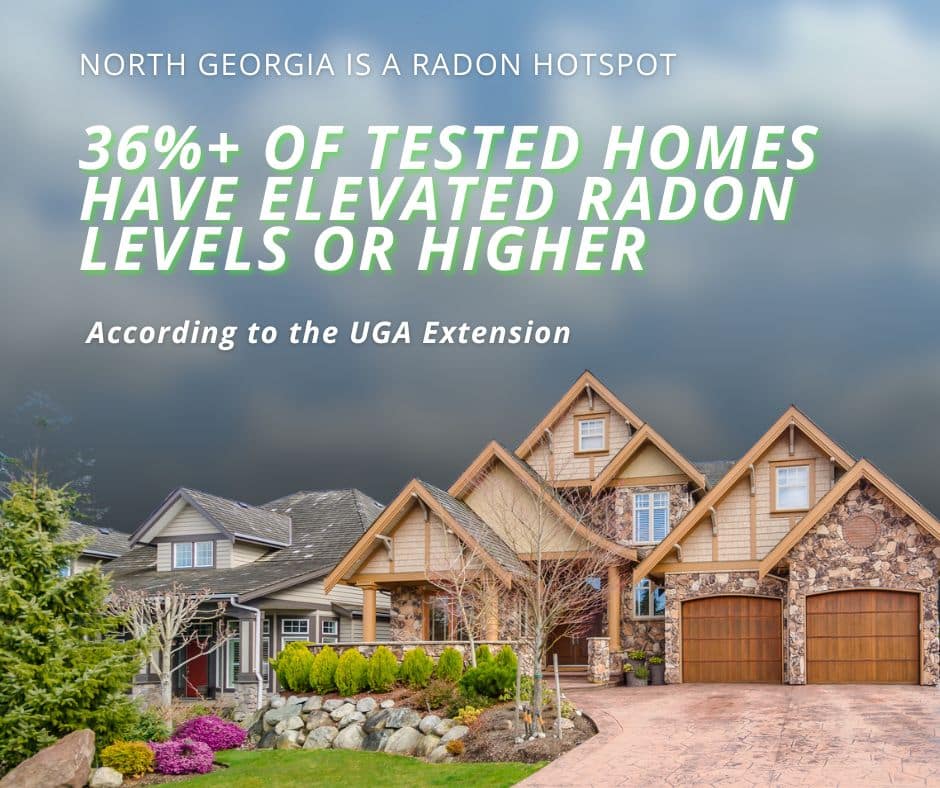
Georgia sits across all three EPA radon zones, and risk follows the state’s geology. North Georgia’s granite-rich mountains fall into Zone 1, the EPA’s highest-risk designation, because that bedrock holds more uranium.
Most of Metro Atlanta, including Henry County, falls into Zone 2, a moderate-risk zone with average readings often in the 2 to 4 pCi/L range. South Georgia and the coastal plain generally test lower, in Zone 3.
Zone alone doesn’t tell you what’s happening in your specific home.
The EPA is clear that individual testing matters no matter which zone you’re in, since two homes on the same street can post very different results depending on foundation type, soil conditions, and how well the structure is sealed.
Warning Signs Worth Testing For
Radon itself has no smell, taste, or visible sign, which is exactly why testing matters instead of just watching for symptoms. But a few things around a home should nudge you toward testing sooner rather than later:
- Visible cracks in the foundation or basement floor
- An uncovered or poorly sealed sump pump pit
- A crawl space foundation with exposed soil
- A home built into a hillside or slope
- No radon test on file, or one that’s more than a couple of years old
- A home located in a Zone 1 or Zone 2 county
Long-term exposure to elevated radon is linked to lung cancer risk, and the EPA lists it as the second-leading cause after smoking. That’s a population-level statistic, not a diagnosis for any individual home, but it’s the reason testing is worth the modest cost.
Where Radon Testing Fits Into a Home Inspection
Radon testing is often added alongside a standard home inspection, particularly during a real estate transaction. A general home inspection covers the structure, systems, and visible condition of a house, but it doesn’t include radon measurement unless it’s specifically requested.
Bundling the two means your inspector places the radon monitor during the same visit, which keeps the timeline tight for a closing.
What Your Radon Test Results Mean
| Radon Level | What It Means | Recommended Action |
| Below 2.0 pCi/L | Low risk | No action needed, though levels can shift over time or after renovations |
| 2.0–4.0 pCi/L | Elevated | No level is fully “safe,” so retesting or mitigation may be reasonable |
| 4.0 pCi/L and above | EPA’s action threshold | Mitigation recommended (a sub-slab depressurization system) |
Radon levels can also swing seasonally. Homes with prolonged snow cover or a sealed-up winter house tend to read higher. Less fresh air is exchanged with the structure. That’s one more reason a short-term test’s timing and closed-building conditions matter for accuracy.
What a Radon Mitigation System Does (If Levels Are High)
If your home tests high, a mitigation contractor installs a vent pipe and fan system. It pulls radon from beneath the foundation and releases it safely above the roofline, before it can enter the living space. Most systems bring levels well under the 4.0 pCi/L threshold. A follow-up test confirms the fix worked.
Related Questions to Explore
- How long does a radon test take? Short-term tests run 2–7 days; the standard real estate test is 48 hours under closed-building conditions. Long-term tests run 90+ days for a seasonal average.
- How much does a radon test cost? A professional radon test from a home inspector typically runs $150–$450, depending on home size, method, and turnaround time needed.
- Do I need a radon test if my home doesn’t have a basement? Yes. Radon enters through any ground-contact area, including a slab foundation or crawl space. Testing is recommended regardless of foundation type.
- Can I test for radon myself, or do I need a professional? DIY kits exist. For real estate transactions, a qualified tester is strongly preferred, because of chain-of-custody requirements and the need for verified, tamper-evident placement.
- Is radon a bigger concern in some parts of Georgia than others? Yes. North Georgia’s Zone 1 counties see the highest average readings due to granite bedrock, while Metro Atlanta falls mostly in Zone 2. Every home still needs its own test, regardless of zone.
When to Call a Professional
If you’re buying or selling a home, don’t rely on a hardware-store kit alone. Get a certified inspector to place and retrieve the device.
You’ll also want a professional if a prior test is more than a couple of years old, if you’ve finished a basement or added a bedroom to a lower level, or if your results land at or above 4.0 pCi/L and you need a certified mitigation referral.
Conclusion
A radon test is a simple, non-invasive way to rule out one of the most common health hazards in a home. It’s also easy to overlook.
If it’s been a while since your home was tested, or you’re heading into a real estate transaction, schedule a radon test with Avalon Inspections and get clear, same-week results.