Most homeowners never think twice about their indoor dryer vent.
You toss in a load, press start, and move on with your day. But if your home has an indoor dryer vent, some real risks are hiding behind that quiet hum that are worth knowing about.
From fire hazards caused by lint buildup to mold growth triggered by trapped moisture, indoor dryer vents are one of the most commonly flagged concerns our inspectors find during home inspections across Georgia.
The good news is that most of these dangers are completely preventable once you know what to look for.
In this post, we break down exactly what those dangers are, how to spot the warning signs early, and what you can do right now to keep your home and family safe.
What Is an Indoor Dryer Vent and Why Does It Get Overlooked?
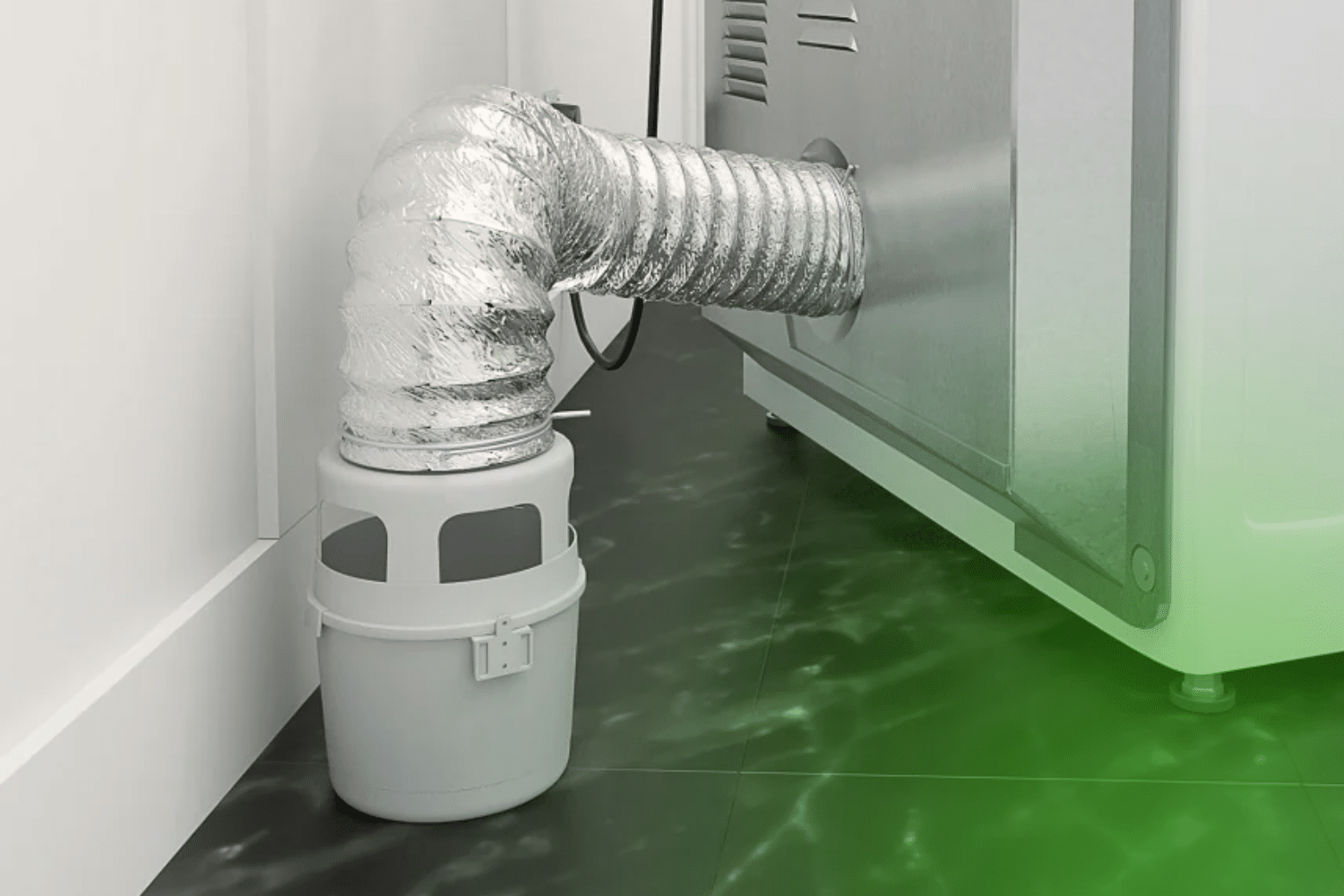
An indoor dryer vent is the venting system that releases your dryer’s heat and moisture inside your home instead of routing it outside through an exterior wall.
Most homes use a standard dryer vent that runs through an exterior wall and releases exhaust outside. But in older homes, condos, apartments, and some townhomes, an indoor dryer vent kit is used instead.
These kits typically connect to the dryer’s exhaust and filter the air through a small reservoir of water or a mesh screen before releasing it into the laundry room.
Because they seem to work just fine on the surface, indoor dryer vents are easy to ignore. Clothes dry. The dryer runs. Nothing seems wrong.
The problem is that the issues caused by an indoor dryer vent are often hidden. They build up slowly over time, and by the time a homeowner notices something, the damage has already started.
The Most Common Indoor Dryer Vent Dangers Found During Inspections
Lint buildup and moisture are the two biggest dangers, and both are commonly overlooked until a professional inspection catches them.
Our inspectors frequently flag indoor dryer vent issues during home inspections across the greater Atlanta metro and surrounding Georgia communities. These are the hazards that show up most often.
Lint Accumulation and Fire Risk
According to the U.S. Fire Administration, dryers cause approximately 2,900 home fires every year, and the leading cause is failure to clean them.
Lint is highly flammable. When it builds up inside an indoor dryer vent system or along the duct run, it creates a serious fire hazard that is completely preventable.
Moisture and Humidity Buildup
Unlike an exterior vent, an indoor dryer vent releases warm, moist air directly into your living space. Over time, that excess humidity can seep into walls, ceilings, and floors. When moisture has nowhere to go, mold and mildew follow.
This is especially worth paying attention to in Georgia, where the naturally humid climate means indoor moisture levels are already higher than in many other parts of the country.
Poor Air Quality
As the dryer runs, tiny lint particles pass through the filtration system and get released into the air inside your home. That means you and your family are breathing in those particles every time the dryer runs.
Non-Compliant Duct Materials
Many older homes have dryer ducts made from plastic or flexible foil accordion material. These materials trap lint easily, restrict airflow, and are not up to current safety codes.
Rigid or semi-rigid metal ducting is the correct choice, and it is something inspectors check for every time.
Blocked or Kinked Ductwork
Even a small kink in a dryer duct can significantly restrict airflow. When airflow is restricted, the dryer works harder, runs hotter, and increases the risk of both fire and mechanical failure.

Warning Signs Your Indoor Dryer Vent Is a Safety Risk
If your indoor dryer vent has a problem, your dryer will usually show you the warning signs before anything serious happens.
Watch for these common red flags:
| Warning Sign | What It Could Mean |
| Clothes take more than one cycle to dry | Restricted airflow or clogged vent |
| The laundry room feels unusually hot or humid | Moisture is not being properly filtered or vented |
| Burning or musty smell near the dryer | Lint buildup near the heat source or early mold growth |
| Visible lint around the vent or behind the dryer | Lint is escaping the filtration system |
| Dryer shuts off mid-cycle | Overheating due to blocked or restricted airflow |
| Condensation on walls or windows near the laundry area | Excess moisture is released into the room |
If you notice any of these signs, it is a good idea to stop using the dryer until the issue is inspected and resolved. These are not minor inconveniences.
They are early warnings of a larger problem that could put your home and family at risk.
Indoor Dryer Vent Safety and Maintenance Tips
The good news is that most indoor dryer vent problems are preventable. A few simple habits go a long way toward keeping your home safe between professional inspections.
Here is what you can do right now:
1. Clean the Lint Trap After Every Single Load
This is the simplest and most effective thing you can do. A clogged lint trap forces the dryer to work harder and pushes more lint into the duct system. Make it a non-negotiable habit every time you run a load.
2. Inspect the Duct Run at Least Once a Year
Disconnect the dryer from the vent duct once a year and visually inspect the inside. Look for lint buildup, kinks, or any sections that have come loose. If you see significant buildup, it is time to clean or replace the duct.
3. Replace Plastic or Foil Accordion Ducts
If your dryer is connected to a flexible plastic or foil accordion duct, replace it as soon as possible. These materials are not code-compliant in most areas and are a known fire hazard. Rigid or semi-rigid metal ducting is the correct option.
4. Monitor the Laundry Room for Excess Humidity
Because indoor dryer vents release moisture into your home, it is smart to run a dehumidifier in the laundry area, especially during heavy-use periods. Improving ventilation in that room also helps reduce moisture-related risks.
5. Keep the Area Around the Dryer Clear
Storing items on top of or directly behind the dryer creates a fire hazard. Keep the dryer clear of clothing, boxes, cleaning supplies, and anything else that could ignite if the dryer overheats.
6. Never Run the Dryer While You Sleep or Leave the House
This is a simple habit that most homeowners skip, but should not. If a dryer fire starts while you are asleep or away, response time is dramatically reduced. Run the dryer only when someone is home and awake.
7. Check for Mold Near the Vent or in the Laundry Room
Every few months, look around the vent termination point, behind the dryer, and along nearby walls for any signs of mold or mildew. Pay attention to musty smells too, as mold is not always visible right away.
8. Know When to Call a Professional
There is a clear line between routine maintenance that homeowners can handle and issues that need a professional eye.
If you notice any of the warning signs listed above, if your duct run is long or has multiple bends, or if your home is older and has never had a dryer vent inspection, it is time to call a qualified home inspector.

Does an Indoor Dryer Vent Affect Your Home Inspection Results?
Yes, an indoor dryer vent can absolutely affect your home inspection results, especially if there are code violations, safety hazards, or signs of moisture damage.
During a home inspection, our team evaluates the dryer vent system as part of the overall laundry area assessment. Here is how that typically plays out:
For Buyers
If an indoor dryer vent system is flagged during your inspection, you want to know exactly what the issue is before you close.
A simple maintenance concern is very different from a moisture-damaged wall or non-compliant duct installation. Understanding what you are walking into helps you negotiate or plan for repairs.
For Sellers
Addressing indoor dryer vent issues before you list your home removes a potential negotiating point for buyers.
Something as straightforward as replacing a plastic duct with metal ducting or cleaning out a clogged vent can prevent your inspection from coming back with flagged items.
In our experience inspecting homes across Georgia, including the Atlanta metro, Marietta, Alpharetta, and surrounding counties, indoor dryer vent concerns are among the more commonly noted laundry area findings, particularly in older homes and properties with interior laundry rooms that lack proper exterior wall access for standard venting.
How Often Should You Have Your Indoor Dryer Vent Inspected?
Most homes should have their indoor dryer vent professionally inspected at least once a year.
However, some households need more frequent attention.
If you do multiple loads of laundry per day, have a large family, or use the dryer heavily for things like towels and bedding, consider having the vent system inspected every six months.
Here is a simple general guideline:
| Household Type | Recommended Inspection Frequency |
| 1 to 2-person household | Once per year |
| Family of 3 to 4 | Once per year, duct cleaning is required every 1 to 2 years |
| Large family or heavy use | Every 6 months |
| Home with pets | Every 6 to 12 months (pet hair accelerates lint buildup) |
| Older home with original ductwork | Annual inspection plus duct evaluation |
Between professional inspections, the homeowner maintenance steps listed above will help you catch problems early and keep the system running safely.
What Inspectors Actually Look for in an Indoor Dryer Vent
A thorough home inspector evaluates much more than just whether the dryer turns on. Here is exactly what gets checked during an indoor dryer vent inspection.
Duct Material and Code Compliance
The type of material used for the duct run matters. Plastic ducts and thin foil accordion ducts are flagged as hazards.
Rigid metal or semi-rigid metal duct is the standard that meets current building codes in most jurisdictions, including Georgia.
Vent Termination Point
Where the vent ends matters just as much as what it is made of. Inspectors check whether the indoor vent kit is positioned safely, whether it is functioning properly, and whether the filter or reservoir is clean and intact.
Length of the Duct Run and Number of Bends
Every bend in a dryer duct reduces airflow. Most manufacturers and local codes set a maximum length for dryer duct runs, and each 90-degree bend counts against that total.
A duct that is too long or has too many turns creates back pressure that increases fire and mechanical risk.
Presence and Condition of Lint Filtration
For indoor dryer vents specifically, inspectors look at whether the lint filtration device is present, properly connected, and actually clean enough to function. A filter that is completely clogged with lint is not filtering anything.
Overall Installation Quality
Finally, inspectors look at the big picture. Is the duct properly secured? Are there gaps or loose connections? Is the dryer positioned in a way that puts unnecessary strain on the duct? These details all factor into the overall safety assessment.
Related Questions
Can an indoor dryer vent cause mold in my home?
Yes. Because indoor dryer vents release warm, moist air into your living space instead of outside, excess humidity can build up over time.
That moisture can get into walls, floors, and nearby surfaces, which creates conditions where mold and mildew thrive.
Is it safe to use an indoor dryer vent kit long-term?
Indoor dryer vent kits are sometimes used as a short-term solution when exterior venting is not possible.
However, they are generally not recommended for long-term use because of the ongoing moisture and air quality concerns. If you have been using one for an extended period, a professional inspection can help you assess whether any damage has occurred.
How do I know if my dryer vent is clogged?
The most common signs of a clogged dryer vent are clothes that take more than one cycle to dry, a laundry room that feels unusually hot, and a burning smell near the dryer.
You can also disconnect the duct and look inside for visible lint buildup.
Will a home inspector check my dryer vent?
A standard home inspection includes an evaluation of the dryer vent system as part of the laundry area assessment.
How do I reduce humidity from an indoor dryer vent?
The best long-term solution is to switch to exterior venting if possible.
In the meantime, running a dehumidifier in the laundry room, improving general ventilation in the space, and cleaning the indoor vent kit regularly will help reduce moisture buildup.
Conclusion
Your dryer vent is one of those things that is easy to forget about until something goes wrong. The good news is that a professional inspection can catch the most common indoor dryer vent dangers before they turn into serious problems.
At Avalon Home Inspections, we take a thorough, no-shortcuts approach to every inspection. That means we look carefully at the details that other inspections sometimes miss, including the laundry area, dryer venting, and other often-overlooked systems throughout your home.
Whether you are buying, selling, or simply want peace of mind about the home you are already in, we are here to help.
Schedule your home inspection with Avalon Home Inspections today.