
If your basement floor drain is backing up, it usually means water cannot flow out the way it should.
In many cases, the issue points to a blockage, an overwhelmed sewer line, or a drainage problem that deserves attention sooner rather than later. Ignoring it can lead to water damage, health concerns, and costly repairs.
This guide explains why basement floor drains back up, what it means for your home, and how a professional home inspection can help you understand the risk.
What Is a Basement Floor Drain and What Does It Do?
A basement floor drain is designed to remove excess water from the lowest level of your home. It is often located near a water heater, laundry area, or utility space.
Its main purposes include:
- Draining water from appliances like washing machines or water heaters
- Preventing minor water buildup from becoming flooding
- Acting as a relief point during heavy moisture events
Most basement floor drains connect to the home’s main sewer line.
In some cases, they may connect to a storm drain system. When everything works correctly, water flows away quietly, and you never notice it.
When it does not, that is when problems start.
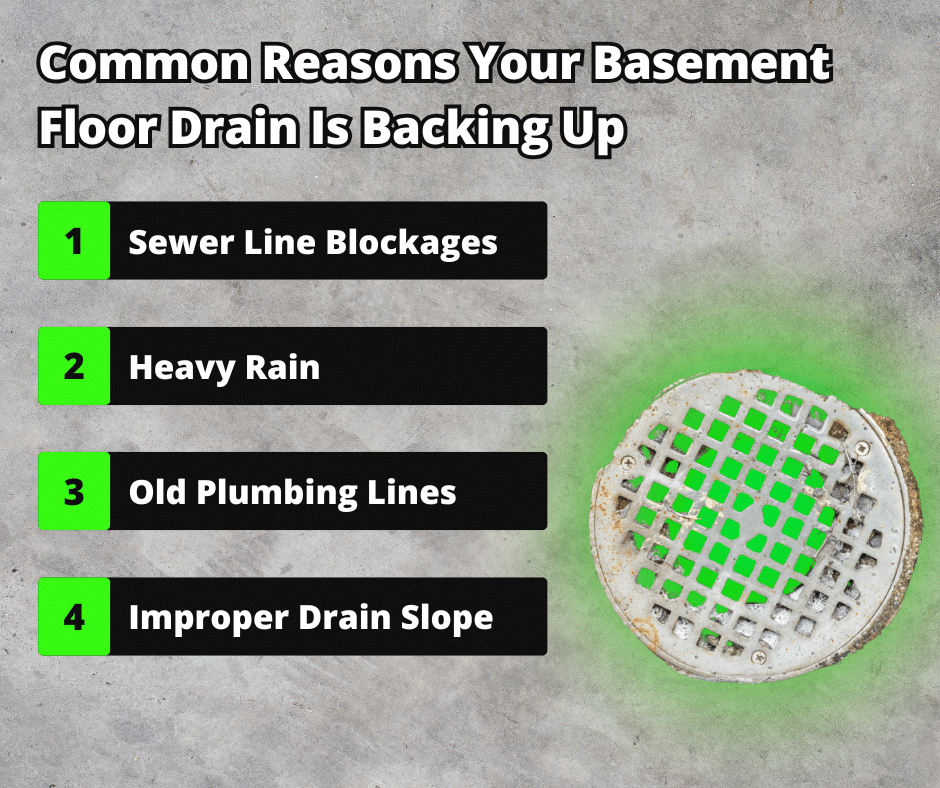
Why Is Your Basement Floor Drain Backing Up?
A basement floor drain backs up when water cannot exit the system fast enough or at all. Instead of flowing away from your home, water reverses direction and comes up through the drain.
This is not just a surface-level issue. It often signals a deeper drainage or sewer concern.
Common Causes Inspectors Find During Home Inspections
During home inspections, certain causes appear again and again when a basement floor drain is backing up.
Sewer Line Blockages and Tree Root Intrusion
Tree roots naturally seek moisture. Over time, they can grow into small cracks in underground sewer pipes. Once inside, they expand and trap debris.
This is one of the most common causes of recurring drain backups in older homes.
Heavy Rain and Overloaded Drainage Systems
After heavy rain, municipal sewer systems can become overwhelmed. When that happens, water has nowhere to go and may push back into homes through the lowest drain point, often the basement floor drain.
If your drain backs up only during storms, this is a strong possibility.
Aging or Damaged Plumbing Lines
Older homes may still have cast-iron or clay sewer pipes. These materials can crack, corrode, or collapse over time.
According to the U.S. Environmental Protection Agency, aging sewer infrastructure is a growing issue across the country, especially in homes built before the 1970s.
Improper Drain Slope or Past Renovation Errors
Basement remodels sometimes change plumbing layouts. If drains are not properly sloped, water may struggle to flow out.
Poor workmanship or unpermitted changes can create long-term drainage problems that only show up years later.
How Basement Floor Drain Issues Show Up in General Home Inspections
A home inspection does not involve running water through underground pipes, but inspectors often spot warning signs.
Common inspection findings include:
- Water stains or residue around the floor drain
- Damp or musty smells in the basement
- Rust or corrosion on nearby plumbing components
- Evidence of past water intrusion or cleanup
These signs do not always confirm the cause, but they do indicate elevated risk.
When a Sewer Scope Inspection Is Recommended
A standard home inspection looks at visible components. A sewer scope inspection goes further.
A sewer scope uses a small camera to inspect the inside of the main sewer line. It is often recommended when:
- A basement floor drain is backing up
- The home is older
- Large trees are present near the sewer line
- There is a history of drainage issues
This inspection can identify blockages, breaks, or other defects that are impossible to see from inside the home.
What a Sewer Scope Can Reveal About Basement Drain Backups
A sewer scope inspection can uncover problems such as:
- Tree root intrusion
- Collapsed or cracked pipes
- Bellies where water collects in low spots
- Severe corrosion or scaling
For buyers, this information can influence repair decisions or negotiations. For homeowners, it provides clarity before small problems become major ones.
What a Backing Up Floor Drain Means for Your Home
A basement floor drain backing up is more than an inconvenience.
Water Damage Risks
Even small backups can damage:
- Flooring and baseboards
- Drywall and insulation
- Stored items and furniture
Water damage can escalate quickly if the issue repeats.
Health and Safety Concerns
If the backup involves sewage, bacteria and pathogens may be present.
The Centers for Disease Control and Prevention notes that sewage exposure increases the risk of illness and mold growth if not cleaned properly.
Signs of Larger Sewer or Drainage Problems
A backup drain often indicates a system-wide issue, not just a local clog. Treating it as a one-time event may allow the real problem to worsen.
What a Home Inspection Can and Cannot Tell You
A home inspection plays an important role, but it has limits.
What an Inspection Can Tell You
- Visible signs of drainage problems
- Evidence of past backups
- Whether further evaluation is recommended
What an Inspection Cannot Confirm
- The exact condition inside the underground sewer lines
- The precise location of a blockage
This is why inspectors often recommend sewer scope inspections when risk factors are present.
Why This Matters Before Buying or Selling a Home
For home buyers, a basement floor drain backing up during or before an inspection is a red flag. It may signal hidden repair costs.
Buyers should understand:
- The potential for future backups
- Whether further inspections are needed
- How the issue affects overall risk
Home sellers should not ignore drain issues. Undisclosed or unresolved problems can delay sales or lead to post-closing disputes.
Addressing the issue early often leads to smoother transactions.
When You Should Take Action Immediately
You should act quickly if:
- Water is backing up repeatedly
- The backup involves sewage smells or debris
- Multiple drains in the home are slow or clogged
- Backups occur after light rain, not just storms
Delaying action can increase cleanup costs and damage.
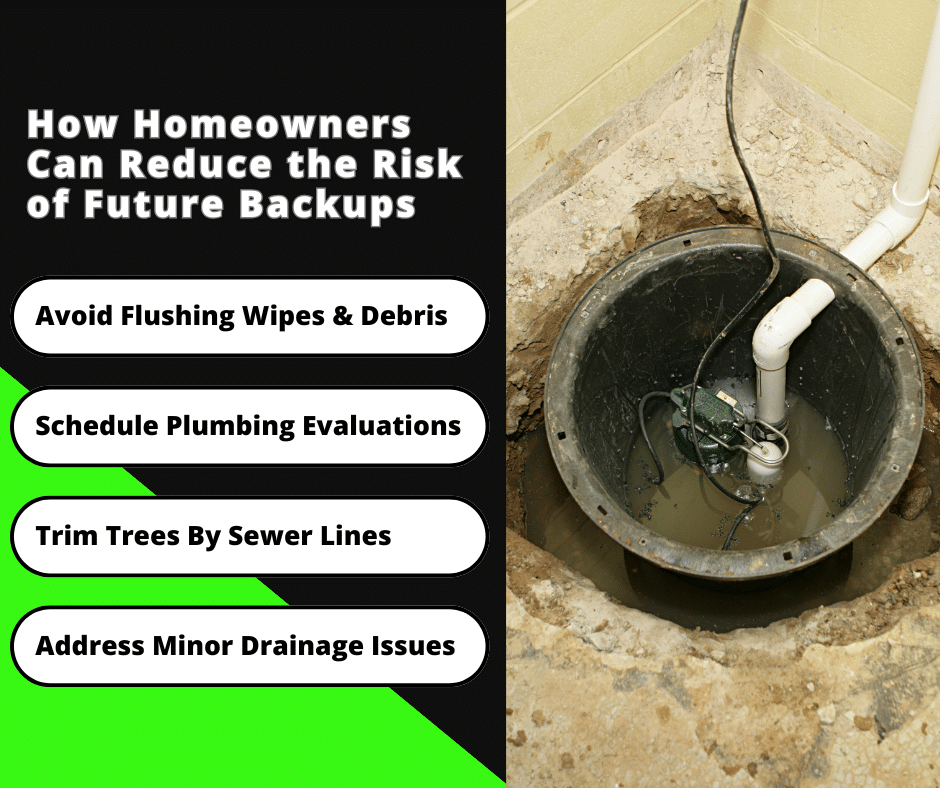
How Homeowners Can Reduce the Risk of Future Backups
While not all issues are preventable, smart steps can reduce risk.
Helpful Prevention Tips Include:
- Avoid flushing wipes, grease, or debris
- Schedule periodic plumbing evaluations
- Keep trees trimmed away from sewer lines
- Address minor drainage issues early
Proactive care often costs far less than emergency repairs.
Common Causes and What They Mean for Your Home
| Cause | What It Often Indicates | Risk Level |
| Tree roots in the sewer line | Aging or cracked pipes | High |
| Backup after heavy rain | Overloaded sewer system | Medium to High |
| Slow drainage year-round | Partial blockage | Medium |
| Sudden sewage backup | Severe obstruction | High |
| Past water staining | Recurring drainage issue | Medium |
Related Questions
Why does my basement floor drain back up after heavy rain?
Heavy rain can overwhelm sewer systems, forcing water back through the lowest drain.
Is a basement floor drain backing up always a sewer problem?
Not always, but sewer issues are one of the most common causes.
Should I get a sewer scope before buying a home?
Many buyers choose a sewer scope for older homes or when drain issues are present.
Can a home inspection miss sewer line problems?
Yes. Underground pipes require specialized services and inspections.
Conclusion
A basement floor drain backing up is often a warning sign, not a minor annoyance. Whether you are maintaining your current home or preparing to buy one, understanding the cause helps protect your investment.
If you are concerned about drainage issues or want peace of mind before a purchase, scheduling a professional home inspection is a smart first step.
Avalon Inspections can help you understand what you are seeing and what to do next, before small problems turn into costly repairs.