
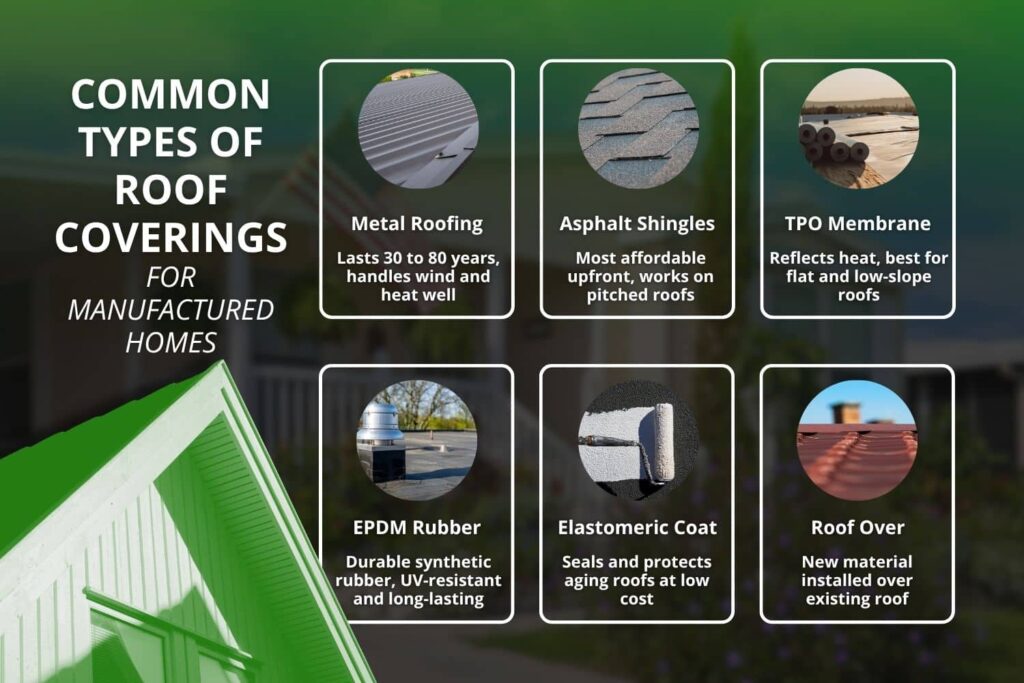
The most common mobile home roof covering types are metal panels, asphalt shingles, TPO membrane, EPDM rubber, and elastomeric coatings. The right one depends on your roof’s shape, your climate, and your budget.
If you own a manufactured home in Georgia or are buying one, knowing what is on the roof and what your options are makes a real difference when something goes wrong or a replacement comes due.
At Avalon Home Inspections, we evaluate the roof covering on every manufactured home we inspect. This guide covers the main material options, explains the difference between a roof-over and a full replacement, and walks you through how to choose.
Why Mobile Home Roofs Are Different
Mobile home, or manufactured home, roofs are not built the same way as roofs on site-built homes. The framing is lighter, the structural load capacity is lower, and many older models have flat or low-slope designs that do not drain as efficiently as a pitched roof.
This affects which materials will hold up over time and which ones are even appropriate for the structure. The roof covering on a manufactured home also takes more direct sun exposure than a traditional home with wide eaves and attic space.
In Georgia’s heat and humidity, that combination of flat geometry and intense sun puts real pressure on whatever material is on top.
Flat and Low-Slope vs. Pitched Roofs
Older mobile homes tend to have flat or bowed roofs. These need membrane-style coverings like TPO or EPDM to stay watertight. Shingles do not shed water properly on a flat surface and will fail quickly.
Manufactured homes built after the 1990s more often have a modest pitch. A pitched roof opens up the option for asphalt shingles or metal panels. Before choosing a covering, confirm your roof’s pitch. It narrows the field significantly.
The Most Common Mobile Home Roof Covering Types
A mobile home can use several different covering types depending on roof shape, climate, and budget. Here is how the most common options compare.
Metal Roofing
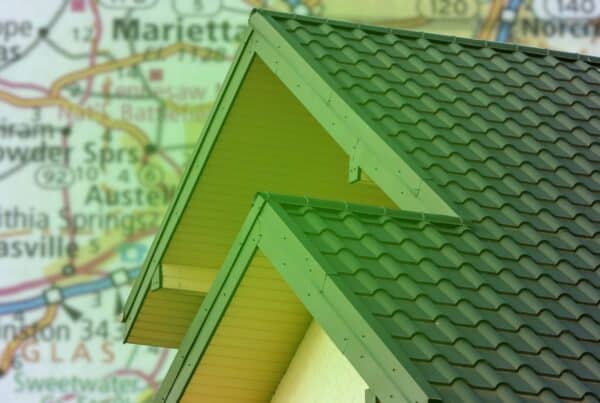
Metal is one of the most popular upgrades for manufactured homes. It can be installed directly over an existing roof in most cases, which reduces labor and disposal costs. A well-installed metal roof lasts 30 to 80 years, handles wind and heavy rain well, and reflects heat effectively with lighter colors.
The main tradeoffs are upfront cost ($5 to $16 per square foot installed) and noise during rain. Metal makes the most sense if you plan to stay in the home long-term and want to minimize future maintenance.
Standing seam metal holds up better than corrugated panels in humid climates because the seam design keeps water from collecting at fasteners.
Asphalt Shingles
Asphalt shingles are the most affordable option upfront at $3 to $5 per square foot installed. They work on pitched roofs, are easy to repair, and replacement materials are widely available. The tradeoff is lifespan: expect 15 to 25 years, and potentially less in areas with frequent storms or wide temperature swings.
Shingles are also heavier than metal or membrane options. Confirm the roof framing can handle the added load before installing it on an older manufactured home.
TPO Membrane
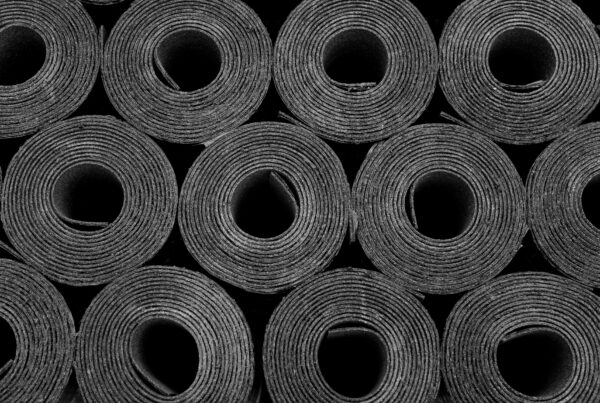
Thermoplastic polyolefin (TPO) is the standard choice for flat and low-slope mobile home roofs. It is a single-ply reflective membrane that reflects sunlight and can lower cooling costs by roughly 30% in hot climates. According to the EPA’s research on cool roof performance, reflective roof surfaces on air-conditioned residential buildings can reduce peak cooling demand by 11 to 27%. TPO runs $4 to $10 per square foot installed and lasts 10 to 25 years.
TPO is lightweight, flexible, and straightforward to install. The most common failure point is seams, because TPO comes in rolls narrower than most single-wide homes, the installer needs to heat-weld the seams properly. Poorly sealed seams are where leaks start.
EPDM Rubber Roofing
EPDM (ethylene propylene diene monomer) is a synthetic rubber membrane that has been used on low-slope commercial and residential roofs for decades. It is durable, UV-resistant, and handles temperature extremes well. EPDM runs $4 to $10 per square foot installed and lasts 15 to 25 years.
The standard black EPDM absorbs heat, which is a drawback in warm climates. White EPDM is available and addresses this.
If black EPDM is already on your roof and in reasonable shape, a white elastomeric coating applied over it can add reflectivity and several more years of life before a full replacement is needed.
Elastomeric Roof Coatings
Elastomeric coatings are not a full covering on their own. They are a thick, flexible protective layer applied over an existing roof surface. They seal small cracks, improve reflectivity, and extend the life of an aging EPDM or metal roof.
Coating costs range from $0.50 to $2.50 per square foot, making them the most budget-friendly way to get more years out of a roof that is structurally sound but showing wear.
Coatings are a maintenance strategy. They work well when the underlying deck is solid. If the deck has soft spots, rot, or moisture damage underneath, a coating will trap those problems rather than fix them.
Roof Over vs. Full Replacement
A roof-over means installing new material directly on top of the existing roof without tearing anything off. It costs less because you skip demolition and disposal. Many manufactured home roofing projects use this approach. It is especially common with metal and TPO installations going over old shingles or worn EPDM.
Full replacement means tearing off the existing material down to the deck, inspecting and repairing the structure, then installing new covering. It costs more but gives you a complete picture of what is underneath. If the decking has rotted or insulation has absorbed moisture, a roof-over will seal those problems in rather than solve them.
The general rule: one existing layer with no soft spots or deck damage (a roof-over is a reasonable option). Two or more existing layers, visible rot, or structural concerns, full replacement is the right call.
A home inspector can check for soft spots, moisture intrusion, and deck condition before you commit to an installation method. If you are in the process of buying a manufactured home, that assessment is part of what a manufactured home inspection covers.
How to Choose the Right Covering for Your Home
Four questions narrow it down:
- What shape is your roof? Flat or low-slope roofs need TPO, EPDM, or a coating. Pitched roofs can use metal or shingles.
- What is your climate? In Georgia’s heat and humidity, reflective materials (white TPO, light-colored metal) reduce cooling costs meaningfully. Heavy snow regions require stronger structural consideration; flat membrane roofs can be vulnerable to puncture under ice load.
- What is your budget? Asphalt shingles and elastomeric coatings have the lowest upfront cost. Metal has the highest upfront cost and the lowest long-term cost.
- How long do you plan to own the home? A 15-year shingle roof makes sense if you plan to sell in five years. A metal roof is a better investment for a home you intend to keep for decades.
If your manufactured home needs to meet HUD standards for financing, which most FHA, VA, and USDA lenders require, the roof covering condition is part of that review. Avalon’s manufactured home certification service evaluates the roof as part of the full certification process.
Related Questions to Explore
What is the best roof covering for a mobile home? Metal roofing is generally the best long-term investment for a manufactured home. It lasts 30 to 80 years, handles weather well, and can go over existing material in most cases.
For flat roofs, white TPO membrane is the most practical choice because of its reflectivity and waterproof performance. The best option for your specific home depends on the roof shape, local climate, and how long you plan to own the home.
Can you put a metal roof over an existing mobile home roof? Yes, in most cases. Installing metal over a single existing layer of shingles or membrane is called a roof-over and is a common, cost-effective approach. The exception is if the existing roof has rot, soft decking, or more than one existing layer. In those situations, a full tear-off and replacement is the better call.
What is a roof-over for a mobile home? A roof-over is when new roofing material is installed on top of the existing roof without removing the old material first. It reduces project cost and time. Roof-overs work best when the existing roof is structurally sound with no moisture damage underneath. If the deck is compromised, a full replacement is more appropriate.
How do I know if my mobile home roof covering needs replacing? Common signs include visible sagging, soft spots when you walk on the roof, water stains on interior ceilings, bubbling or peeling on membrane surfaces, and missing or cracked shingles. Any roof more than 20 years old without a recent inspection is worth having looked at, even if there are no active leaks. Catching deterioration early is almost always cheaper than waiting. A manufactured home inspection includes a full evaluation of the roof covering condition.
When to Call a Professional
Some roof issues are obvious from the ground. Others (moisture trapped under a membrane, soft decking under shingles, improper flashing at vents and pipes) only show up when someone who knows what to look for gets up close.
A few situations where a professional evaluation makes sense:
- Before buying a manufactured home. The roof covering condition affects the home’s value, financing eligibility, and what you will spend in the next few years. A manufactured home inspection covers the roof covering as part of the full assessment.
- Before a roof-over installation. An inspector can tell you whether the existing deck is sound enough to build on, which saves you from installing a new roof over hidden rot.
- After a major storm. Hail and wind damage to membrane roofs is not always visible from the driveway. What looks intact from the ground can have punctures and compromised seams when examined up close.
- If your lender requires HUD certification. Most FHA, VA, and USDA loans on manufactured homes require a certification letter confirming the home meets HUD standards. Roof condition is part of that review.
Avalon Home Inspections serves Atlanta and the surrounding Georgia counties. If you have questions about the condition of a manufactured home roof, contact us for a quote.
Conclusion
The right mobile home roof covering comes down to three things: the shape of your roof, your climate, and how long you plan to own the home.
- Metal is the most durable long-term option for pitched and flat roofs alike.
- TPO is the standard for flat roofs where energy performance and waterproofing are the priority.
- Asphalt shingles work for pitched roofs on a tighter upfront budget.
- Elastomeric coatings are the most cost-effective way to extend the life of a roof that is still structurally sound.
Whatever material is on your home now, a professional inspection tells you whether it is holding up or due for attention. If you are buying a manufactured home in Georgia, get in touch with the Avalon team today.